Connect with us on


Connect with us on


The BOMA BEST 2024 Buildings Report reflects a year of transformation and progress within the commercial real estate sector, driven by a commitment to innovation, sustainability, and creating better spaces for people to live, work, and play.
As BOMA BEST continues its focus on elevating building performance, empowering properties to embrace smart technologies and sustainable strategies that prioritize health, efficiency, and community wellbeing. This report highlights a simple truth: buildings are about people—designed, maintained, and operated by them—and our mission remains to equip those individuals with the knowledge and tools they need to succeed.
Download the Report Read MoreAs sustainability becomes a key pillar of long-term value creation in real estate, CapitaLand Investment (CLI) has developed a proprietary Return on Sustainability (RoS) framework to rigorously assess the financial impact of green capital expenditure.
Designed as a data-driven, decision-making tool, the RoS framework evaluates eight key variables that influence financial performance: green capital expenditure (capex), utility savings, carbon cost reductions, rental premiums, longer leasing durations, lower interest rates, reduced insurance premiums, and enhanced asset valuations. By quantifying both risks and returns, this model equips asset managers with a holistic view of the tangible value that sustainability initiatives can unlock.
More than a reporting metric, the RoS framework serves as a capital allocation compass - guiding decisions on investment, asset-level budgets, cost-benefit analysis for asset enhancement initiatives or redevelopments. In an environment where regulatory standards, investor expectations, and climate resilience are evolving rapidly, having a structured methodology to assess the financial case for sustainable investments is not just prudent - it is essential. CLI’s RoS framework bridges the gap between environmental responsibility and financial accountability, ensuring that decisions around sustainability are grounded in both environmental intent and financial discipline.
Download the Report Read MoreOverview: Asian real estate securities are up 17.53% YTD in USD, supported by recovering REITs/Developers, positive FX, and falling rates reigniting investor interest. Lower borrowing costs in Asia ex-Japan enable earnings upgrades and accretive acquisitions, while a weak USD, low growth, and falling rates continue to support positioning in the sector.
The Asia-Pacific Horizon report synthesises fast-moving developments under Trump 2.0 and offers strategic guidance for navigating the turbulence
Download the Report Read More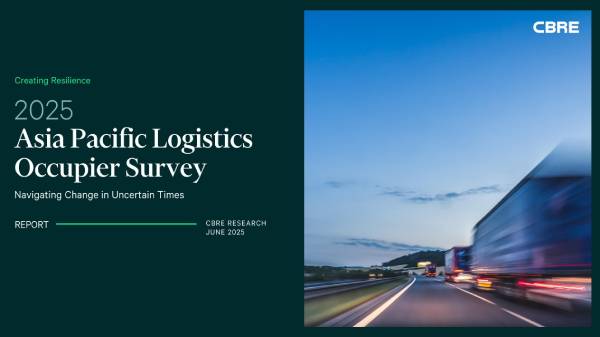
The 2025 CBRE Asia Pacific Logistics Occupier Survey reveals a landscape of cautious optimism among occupiers, shaped by ongoing geopolitical tensions and shifting global trade dynamics. While short-term business confidence has dipped—particularly due to tariff uncertainties and regulatory challenges—long-term expansion plans remain intact.
Key findings highlight a growing trend toward diversification of supply chains, an increase in outsourcing, and a pivot toward asset-light strategies to mitigate risk and manage costs. Occupiers are showing strong interest in emerging economies, with India standing out for its robust occupier sentiment, while mainland China continues to grapple with oversupply despite signs of stabilisation.
Download the Report Read More